|
|
|
|

|
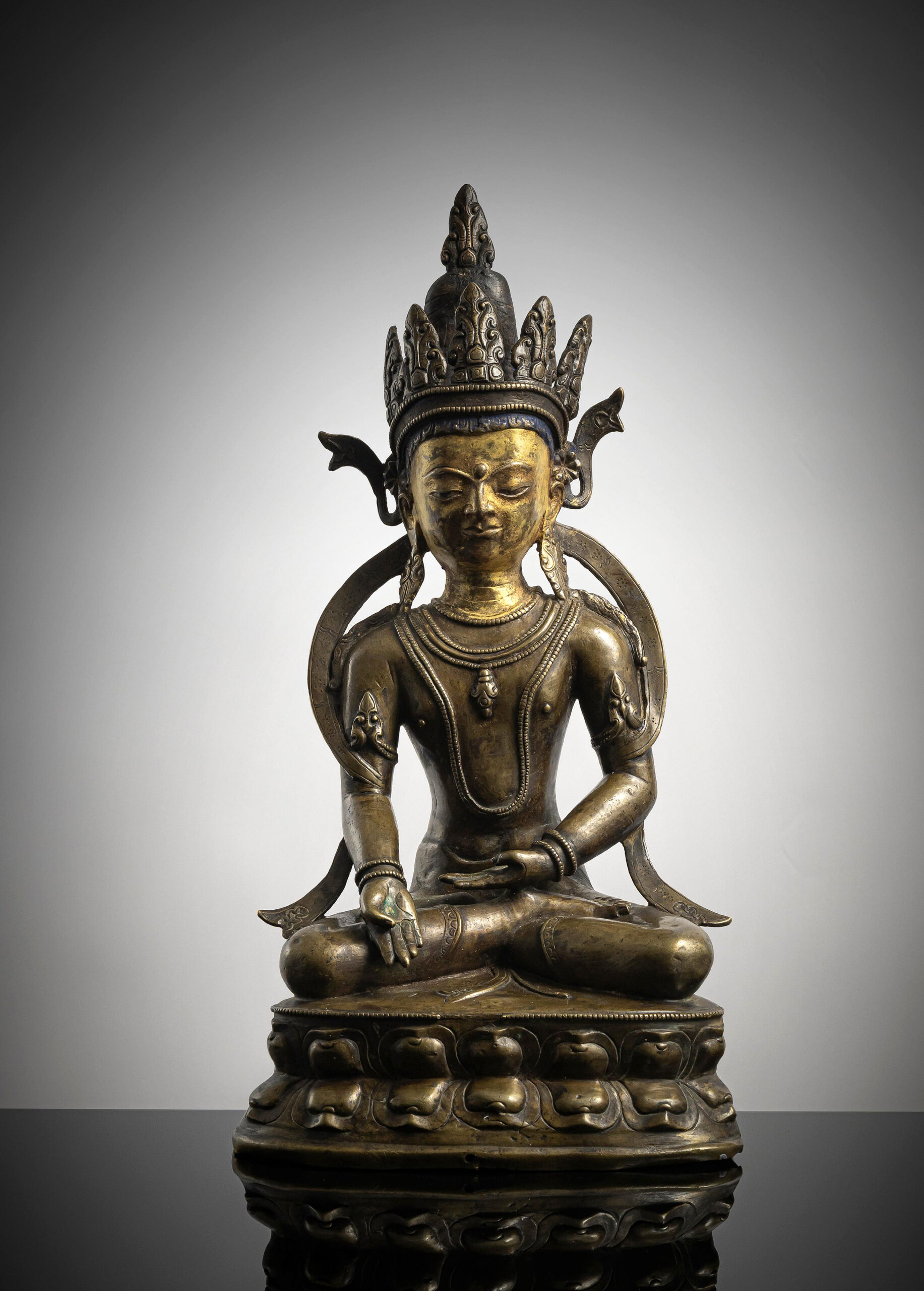
Monumental Tibetan Bronze Ratnasambhava
Tibet, 14th century | Height: 40.5 cm
|
|
|
|
|
|
Dear Friends and Collectors,
|
We are pleased to present an exceptionally rare survival from early Tibetan metal sculpture: a monumental 14th-century Tibetan bronze of Ratnasambhava, the Buddha of the South and embodiment of generosity and equanimity. At over 40 cm in height, this figure belongs to a very small and elite group of early large-scale Tibetan bronzes.
|
|
|
Why this bronze is so important
Large bronze figures from 14th-century Tibet are extremely rare. During this early period, bronze casting technology in Tibet was still developing. Metallurgical knowledge, access to copper alloys, and the ability to control large hollow casts were limited. As a result, most surviving Tibetan bronzes of this era are small, portable images intended for personal devotion.
|
Very few such early monumental bronzes have survived intact, making examples of this scale from the 14th century exceptionally scarce.
|
|
Bronzes of this size represent some of the earliest successful experiments in monumental casting in Tibet. Creating a figure of this scale required exceptional technical mastery and substantial patronage, likely from a major monastery or elite donor. The risks of structural failure during casting were significant, making such works both ambitious and costly.
|
|
|
Historical and artistic significance
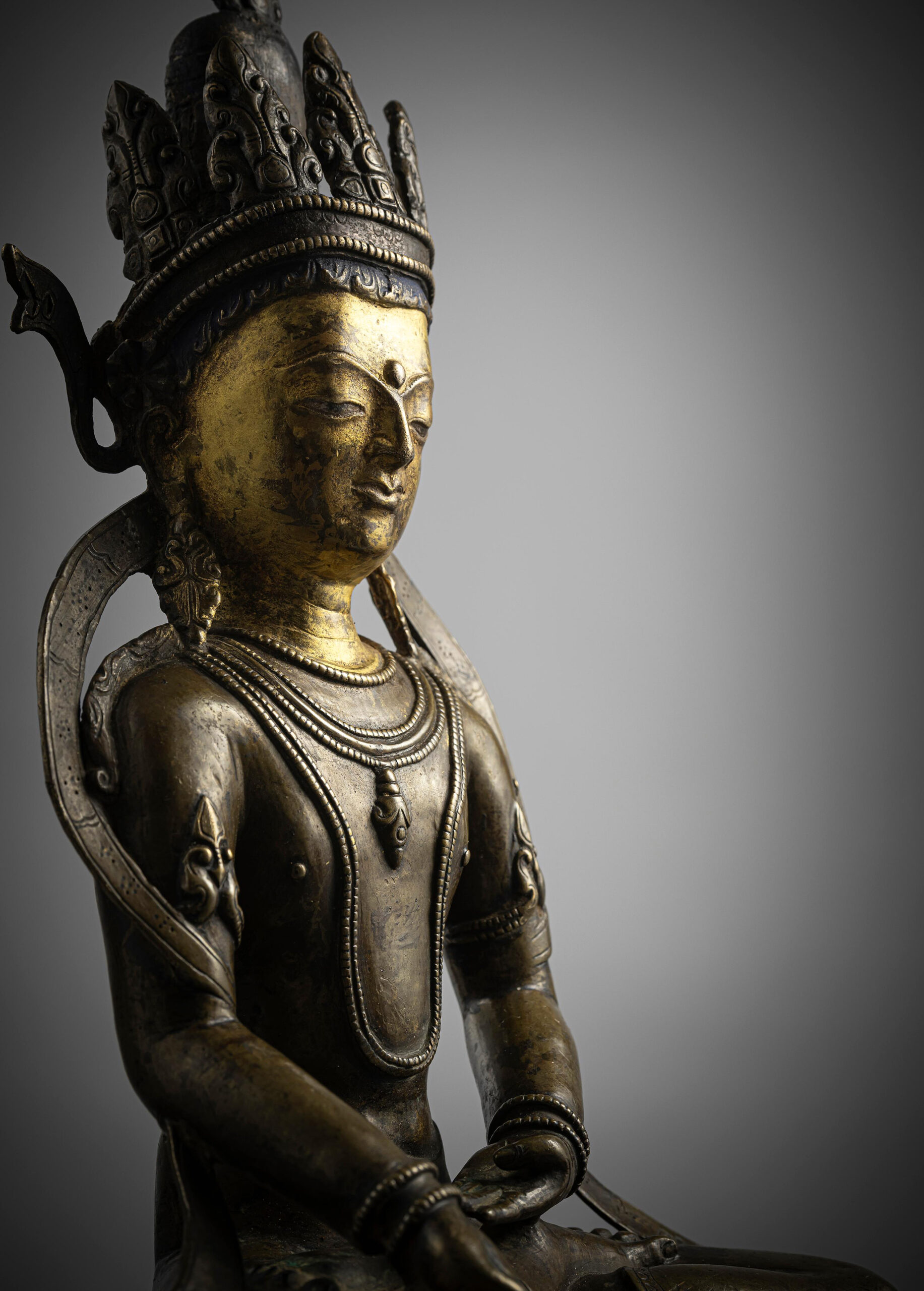
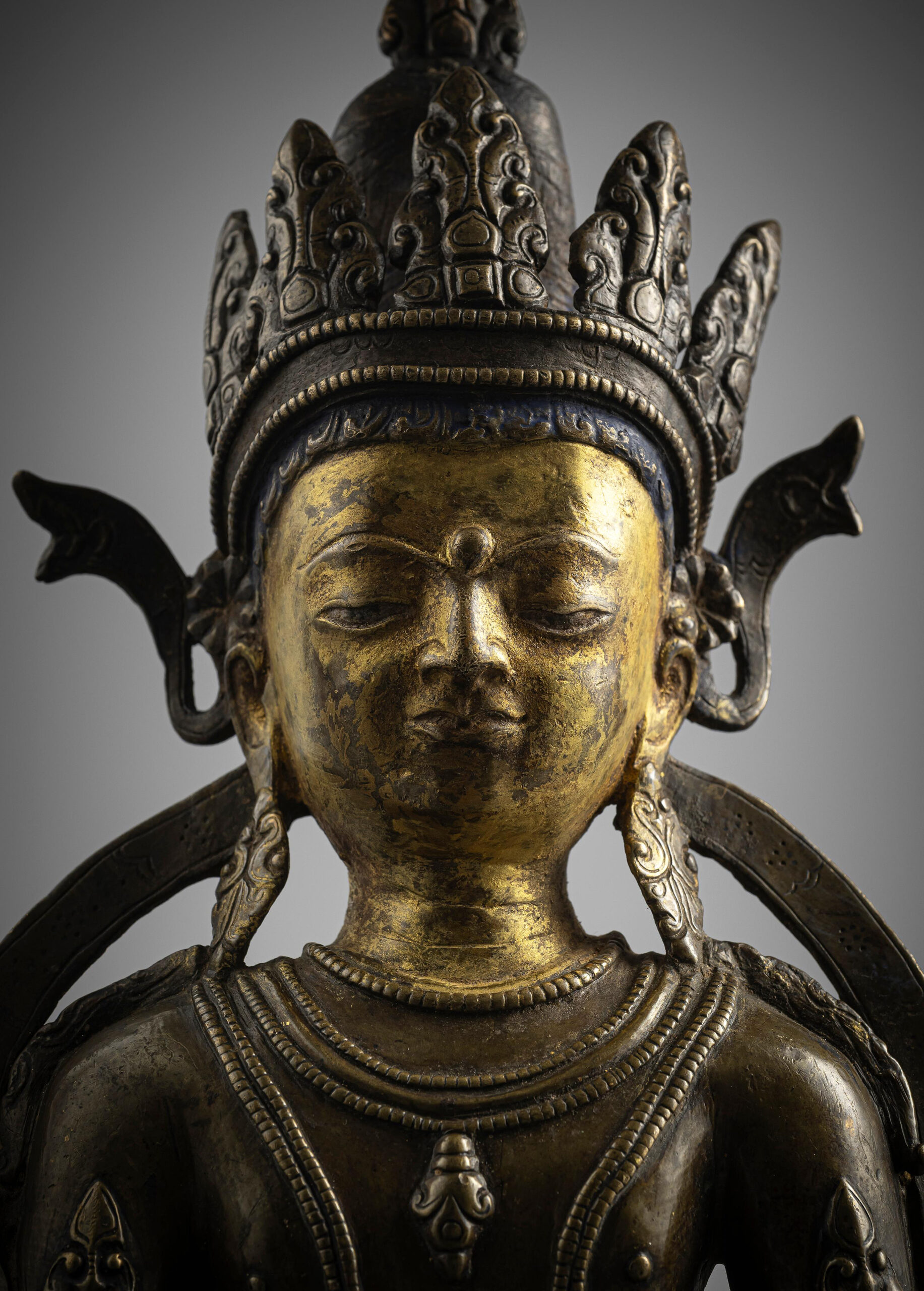
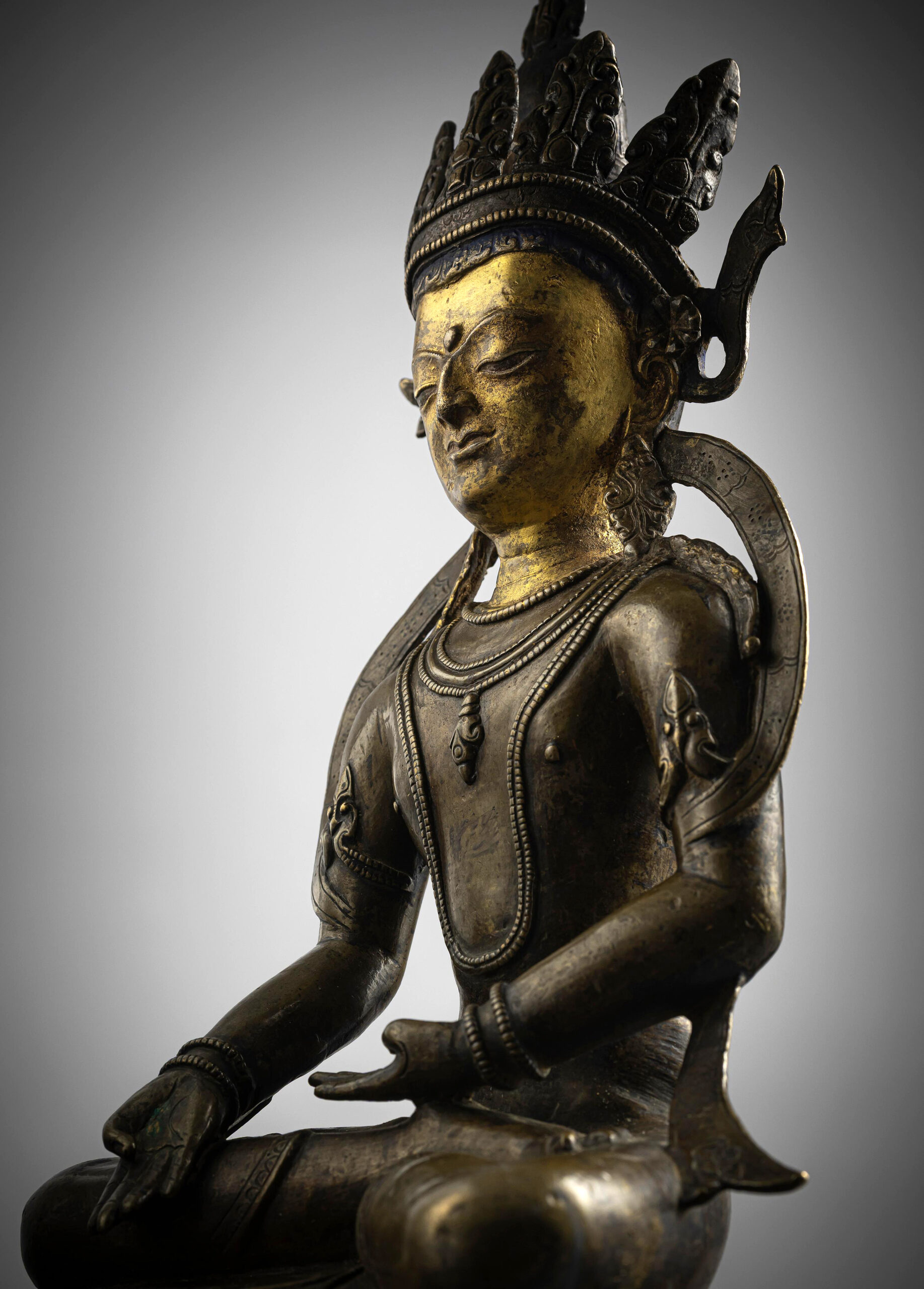
This sculpture stands at a pivotal moment in Tibetan art history, when artists synthesized earlier Indian Pala traditions with emerging Tibetan aesthetics. The calm, cold-gilded face with downcast eyes, the raised urna, and the harmonious proportions convey spiritual authority and meditative presence. The flowing scarf, jewelry, and lotus base are rendered with clarity and restraint, reinforcing the figure’s monumental dignity.
|
|
These early large bronzes are not only religious icons; they are historical documents, marking the transition from small devotional images to commanding sculptural statements within temple spaces.
|
|
|
Provenance
|
This bronze comes from the collection of Madame Françoise Leroy-Laveissière, assembled between 1960 and 1990. During this period, she was an Asian art expert at the Hôtel Drouot in Paris and worked closely with the renowned Chinese art scholar Michel Beurdeley. Such provenance further underscores the scholarly and connoisseurial importance of the piece.
|
|
|
In summary, this sculpture is rare for its date, size, and technical achievement. It is a surviving witness to the earliest phase of monumental bronze casting in Tibet and carries profound historical, artistic, and spiritual significance. Works of this calibre are rarely encountered outside major institutional collections.
|
|
For further information or a private viewing, please do not hesitate to contact us.
|
With kind regards,
Becker Antiques
|
|
|
|
|

|
Our Instagram Page
|
|
|
|
|
|
|
|
|


