Imperial Gilt-Bronze Avalokitesvara
An Important Imperial Gilt-Bronze Figure of Avalokitesvara
China, Qing dynasty, Yongzheng mark and period (1723–1735)
Height: 16 cm
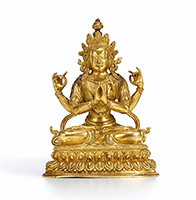
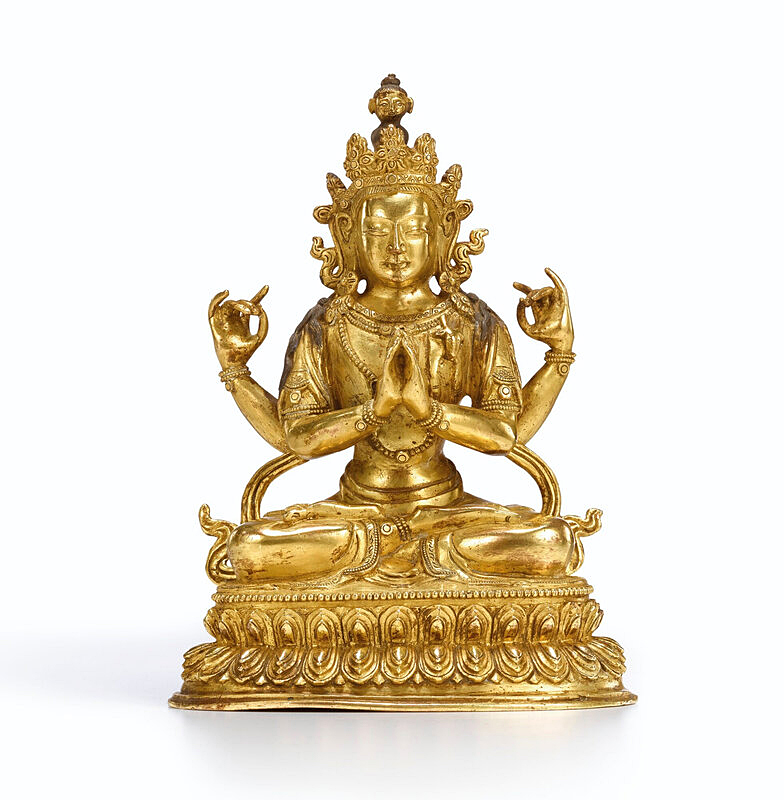
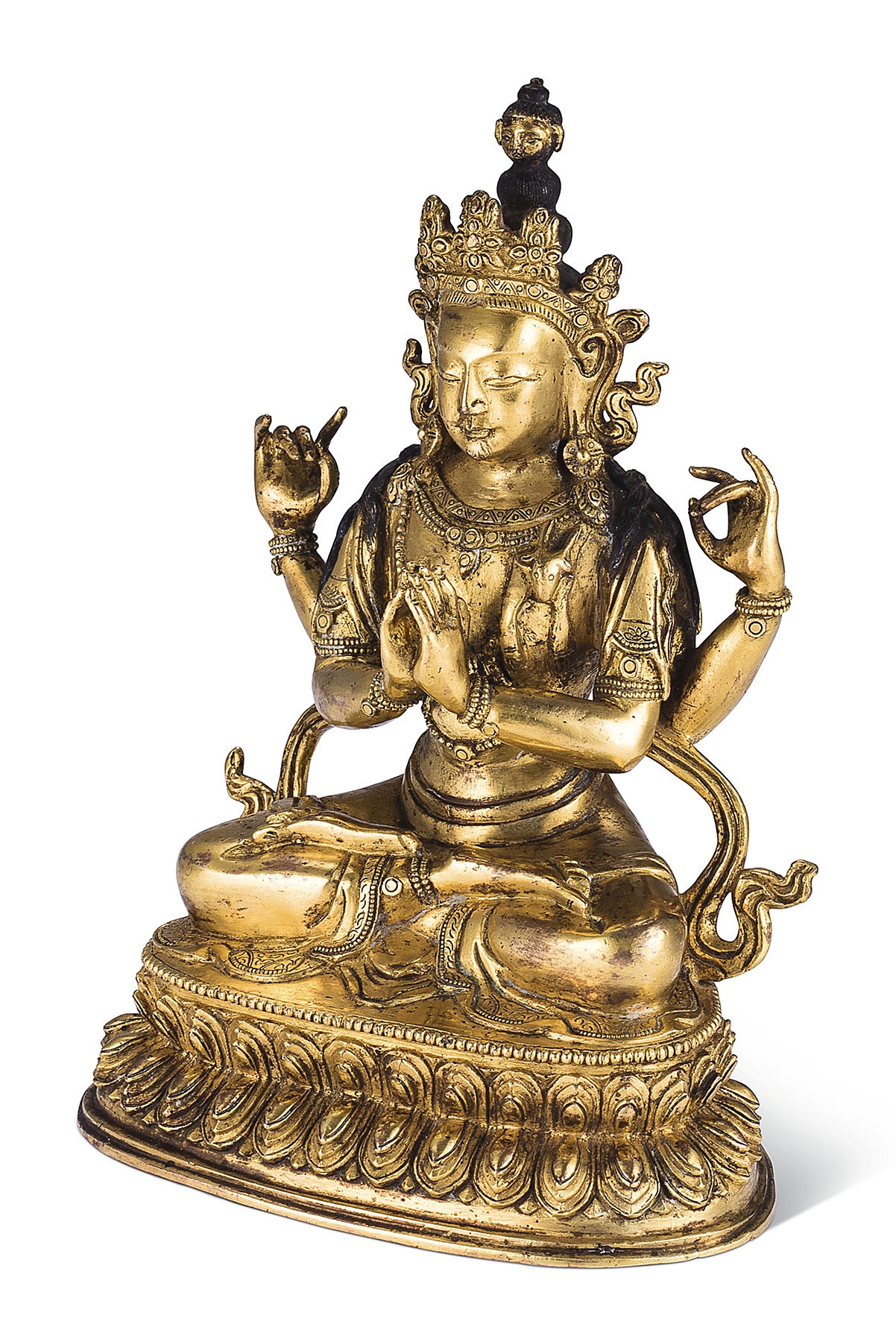
This important imperial gilt-bronze figure represents Avalokitesvara, the Bodhisattva of Compassion, one of the most revered deities in the Buddhist pantheon. Finely cast and richly gilded, the sculpture combines refined modelling, balanced proportions and an extraordinary sense of calm characteristic of high-quality Buddhist bronzes produced during the Yongzheng reign.
Avalokitesvara is shown seated in vajraparyankasana upon a finely modelled double-lotus pedestal. The principal hands are joined before the chest in namaskara mudra, the gesture of reverence and devotion, while the secondary hands are raised gracefully to either side. The four-armed manifestation emphasises the bodhisattva’s unlimited ability to respond to the suffering of sentient beings.
The serene face is delicately modelled, with downcast eyes, gently arched brows and a composed meditative expression. Long pendulous earlobes and elaborate jewellery further emphasise the deity’s princely character. The high crown is richly ornamented and surmounted by a small image of Amitabha Buddha, identifying the figure unmistakably as Avalokitesvara.
Particular attention has been given to the treatment of the jewellery, crown, garments and lotus petals. Fine incised and cast decoration contrasts with the smooth surfaces of the face and body, creating a highly sophisticated visual effect. The flowing scarves curve elegantly around the figure and reinforce the symmetry of the composition.
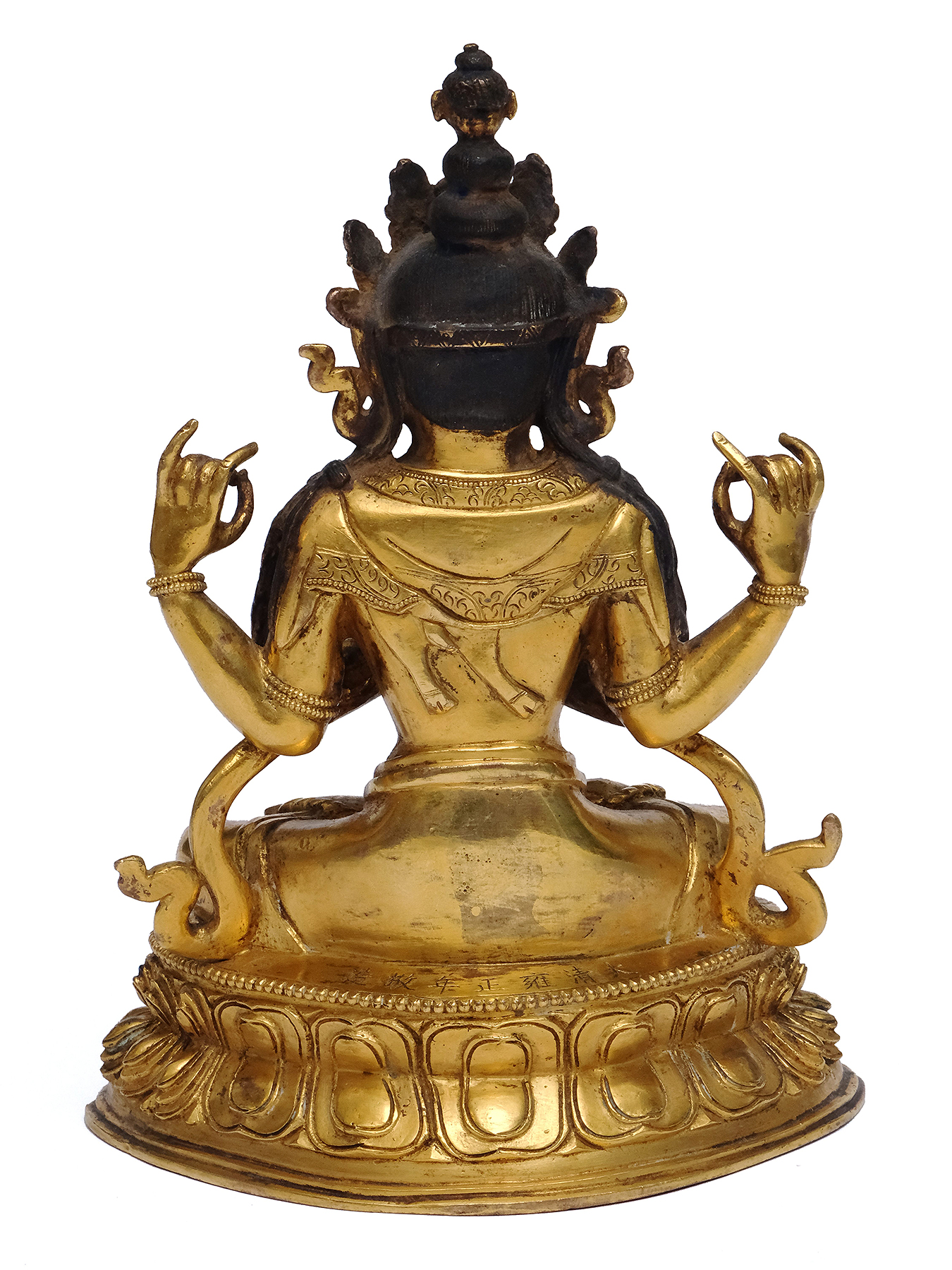
The reverse is equally carefully finished, with the garments and jewellery continuing across the back and the raised secondary arms forming a balanced silhouette. Such attention to areas not immediately visible from the front is characteristic of bronzes intended to be appreciated as fully three-dimensional devotional objects.
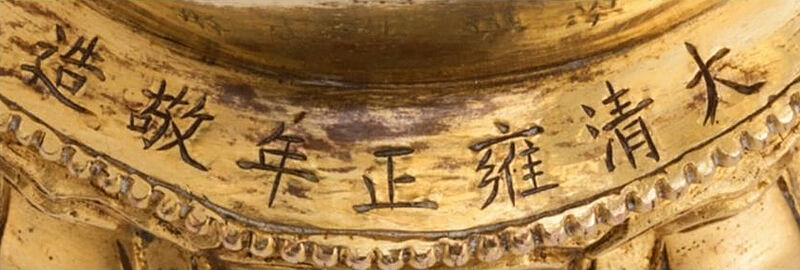
Of particular importance is the seven-character Yongzheng inscription engraved along the reverse edge of the pedestal:
Da Qing Yongzheng nian jing zao
The inscription associates the sculpture directly with the reign of the Yongzheng emperor (1723–1735), one of the most refined periods of Qing imperial artistic production.
The Yongzheng emperor was deeply interested in Buddhist practice and patronage, and Buddhist sculpture produced during his reign is distinguished by technical precision, elegant proportions and an unusually restrained sense of refinement. This figure reflects those qualities particularly well: the composition is formal yet graceful, richly ornamented without appearing excessive, and dominated by the calm spiritual presence of the deity.
The combination of imperial quality, rich gilding, sophisticated casting and a Yongzheng reign inscription makes this Avalokitesvara an important example of early 18th-century Qing Buddhist sculpture.
China
Qing dynasty, Yongzheng mark and period (1723–1735)
Gilt bronze
Height: 16 cm
Provenance
Sotheby’s Hong Kong, Fine Chinese Ceramics and Works of Art, 8 April 2014, lot 3059.