Tang Dynasty Court Lady
Rare Tang Dynasty Pottery Court Lady Holding a Dog
China, Tang Dynasty (618–907 AD)
Dimensions: Height 37 cm × Width 16 cm × Depth 14 cm
Provenance: Private Collection of Mr. J. P. S., a distinguished Amsterdam judge and art collector, the Netherlands. Acquired from his estate following his passing.
Authentication: Accompanied by a Thermoluminescence Test Report from Laboratory Kotalla, Germany, report no. 02B180319, recording an estimated age of 1,150 years ±14%, consistent with a Tang Dynasty attribution.
An Exceptionally Rare Tang Dynasty Pottery Court Lady
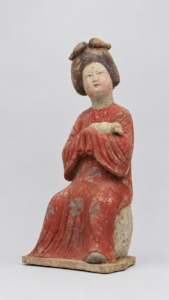
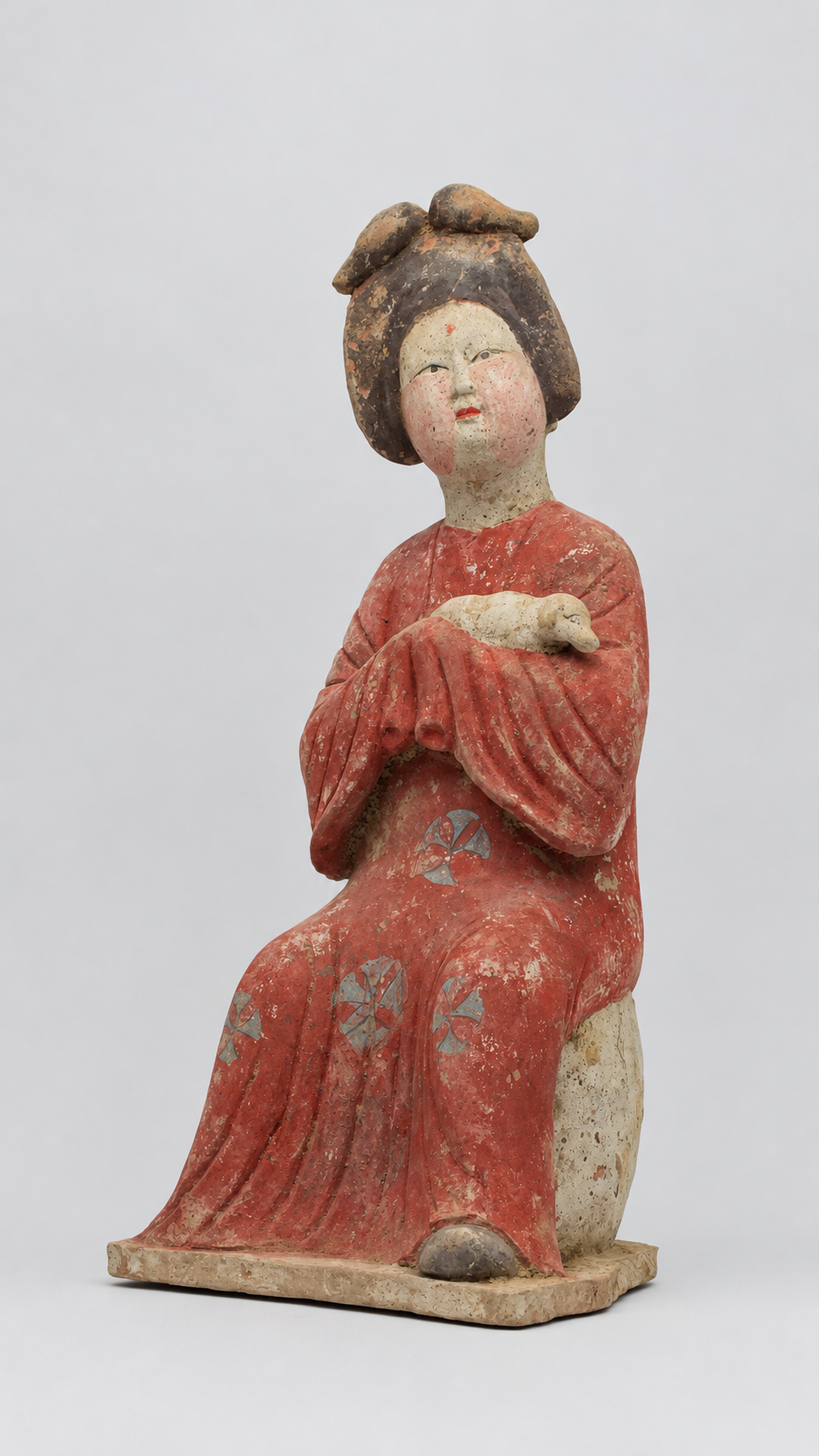
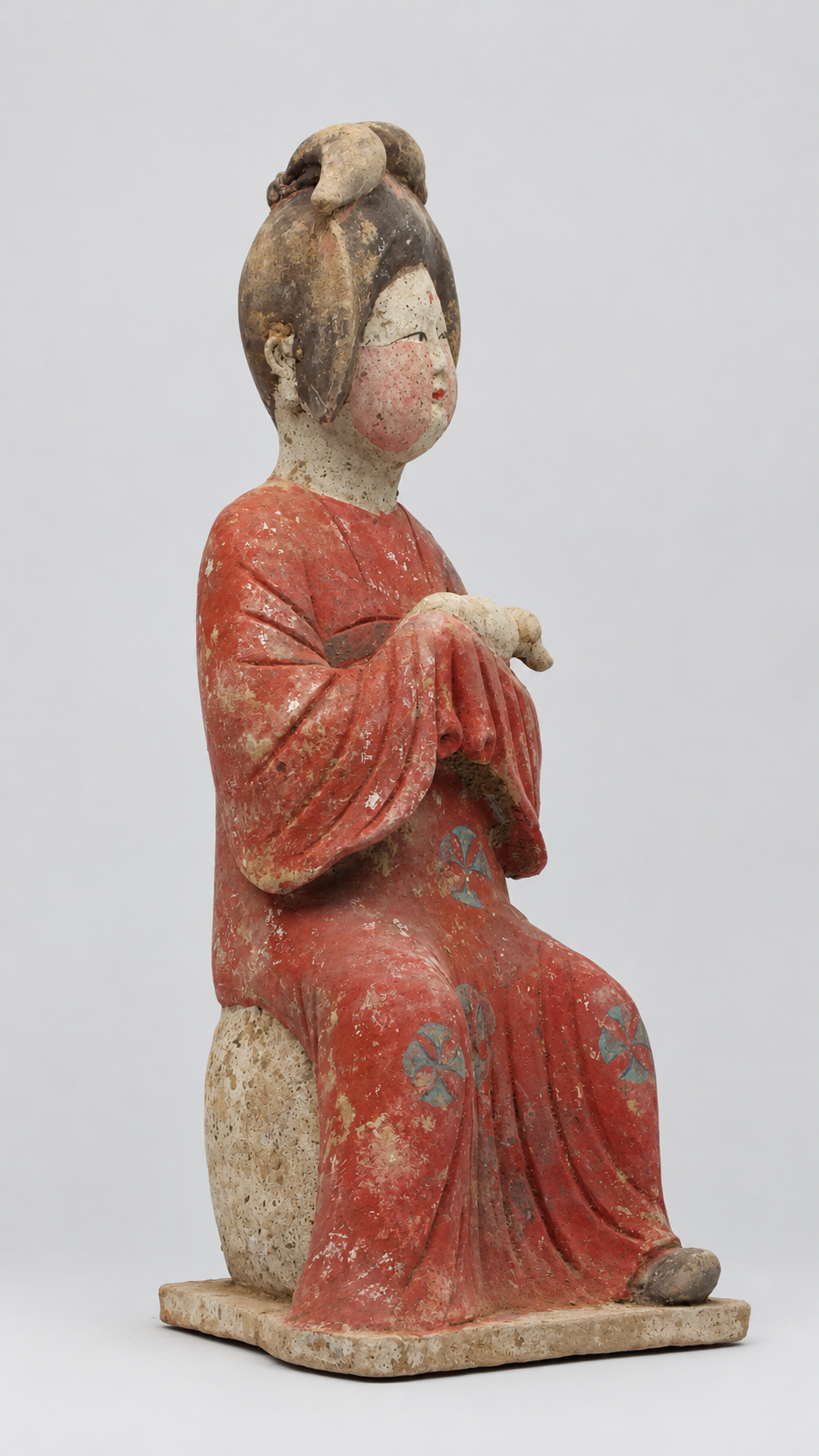
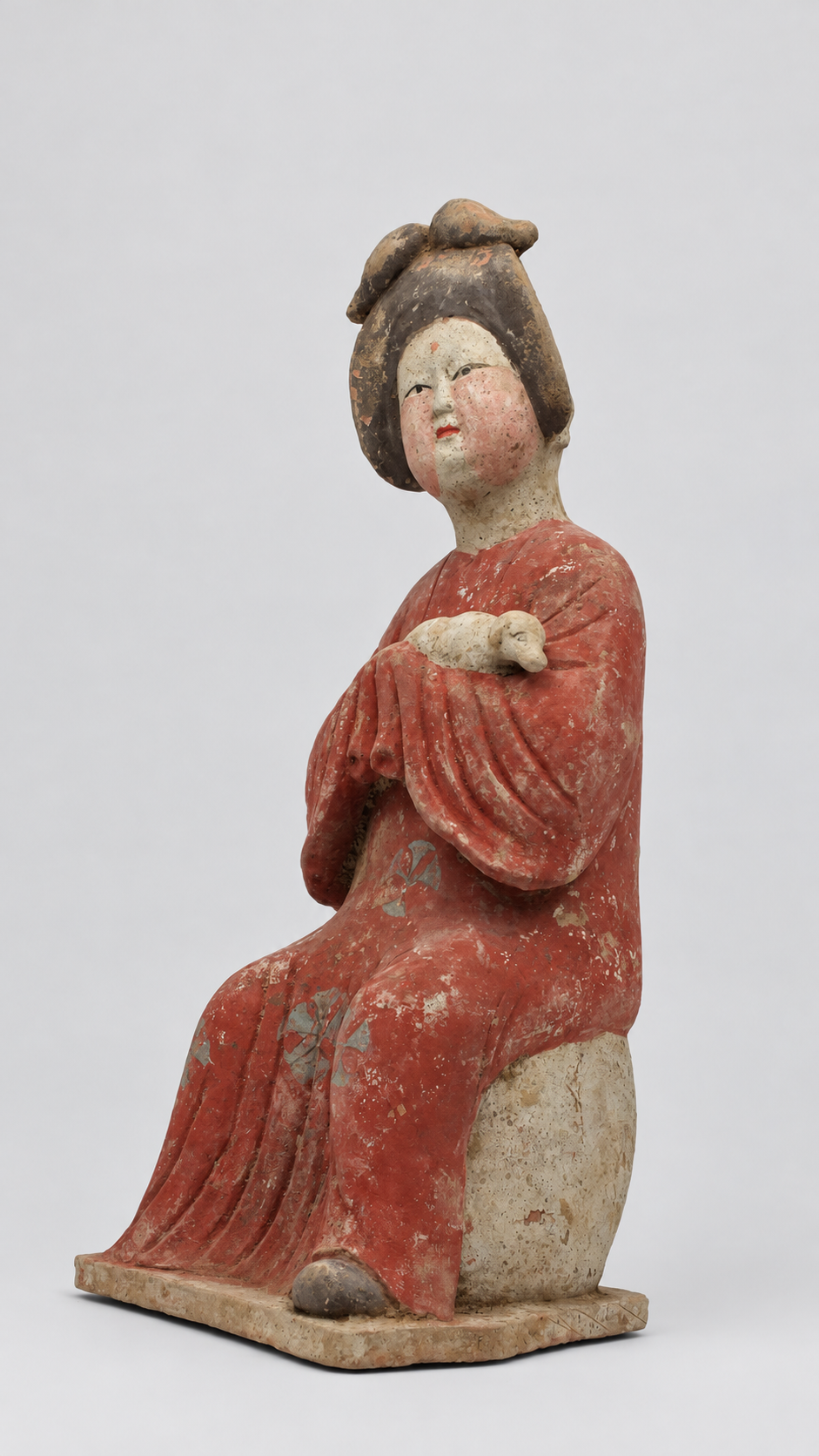
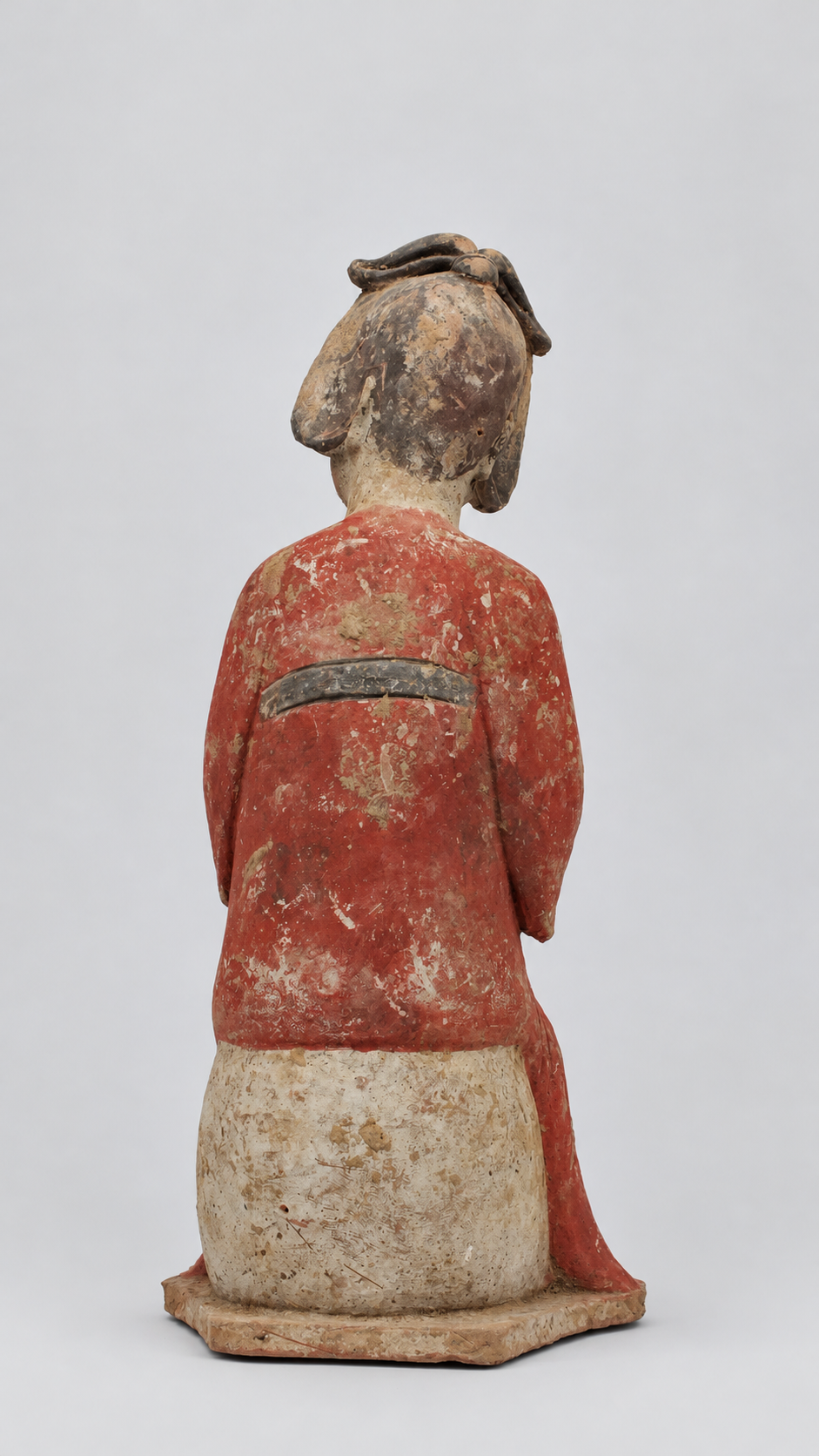
An exceptionally rare and captivating Tang Dynasty pottery court lady, elegantly seated upon a rounded stool and tenderly holding a small companion dog in her folded arms.
Standing an impressive 37 centimetres high, this remarkable Chinese funerary sculpture combines refined modelling, richly coloured surviving polychromy, and an intimate subject that distinguishes it from more conventional representations of Tang Dynasty court ladies.
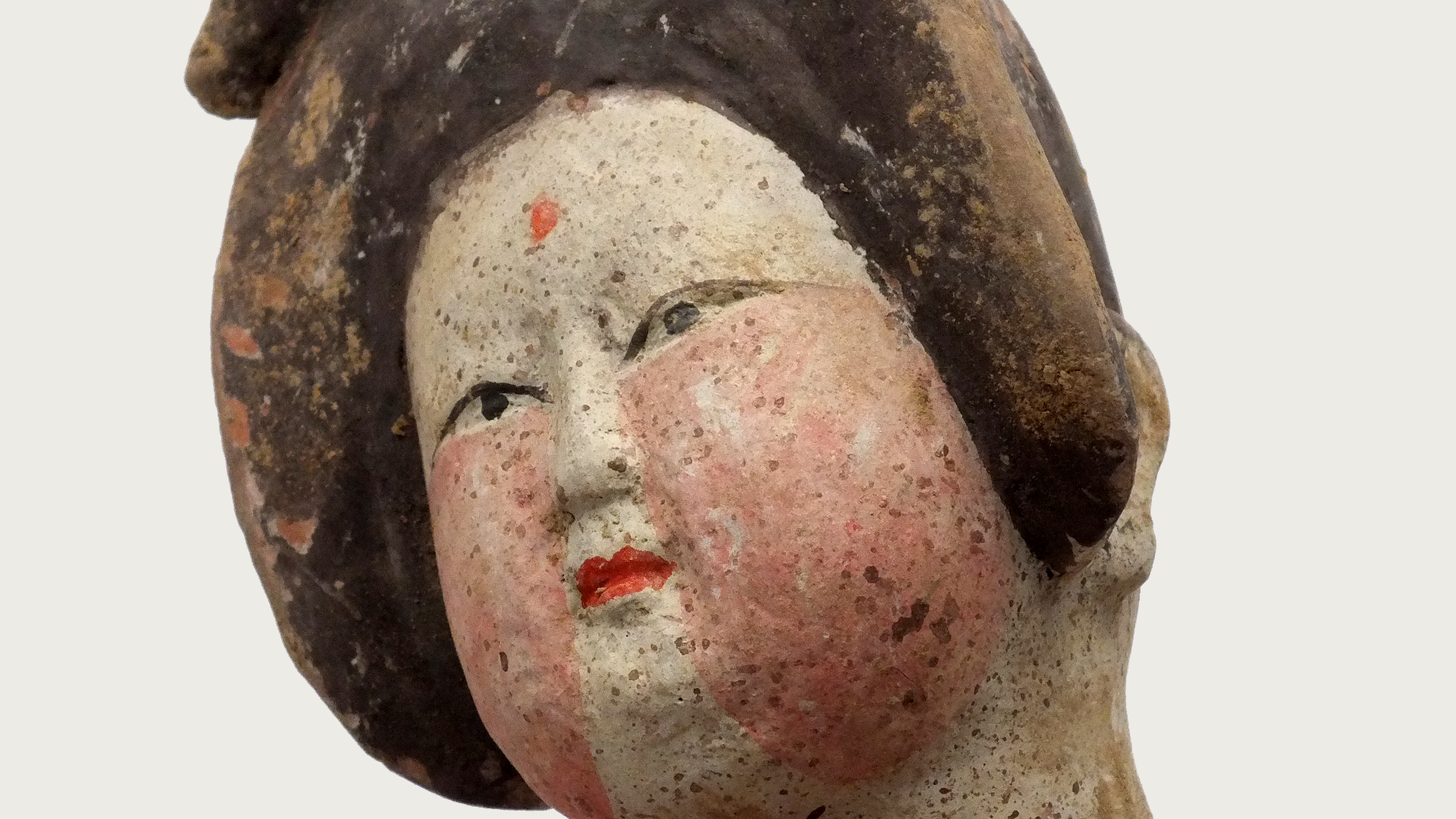
The lady is portrayed with a beautifully modelled, full face, delicately arched eyebrows, narrow almond-shaped eyes, softly rounded cheeks and small vermilion lips. Traces of pink pigmentation remain visible upon her complexion, while her elaborate dark coiffure rises high above her head, reflecting the sophisticated fashions associated with aristocratic women of the Tang period.
Remarkable Original Polychrome Decoration
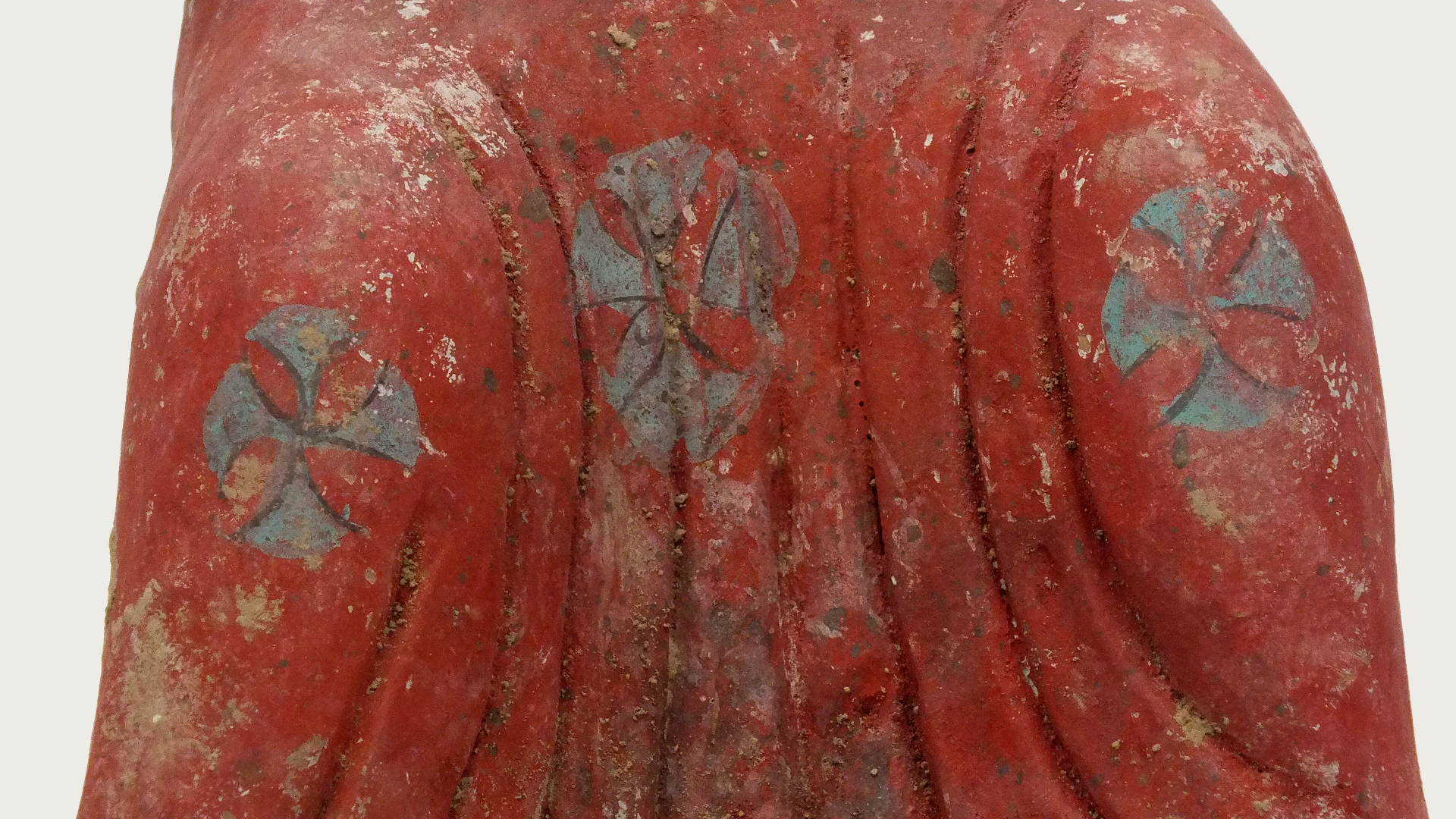
The figure wears a magnificent, flowing deep-red robe with exceptionally wide sleeves and gracefully cascading folds.
Particularly noteworthy is the surviving painted decoration, including delicate blue-green floral and geometric medallions distributed across the richly coloured garment.
The contrast between the vibrant red robe, pale complexion and dark coiffure creates a striking visual composition. These decorative elements demonstrate the sophisticated aesthetic sensibilities associated with Tang Dynasty court culture.
The extensive surviving polychromy is especially attractive, preserving important details of the figure’s original appearance despite the natural surface wear and pigment losses associated with its considerable age.
An Unusual Representation of a Court Lady Holding a Dog
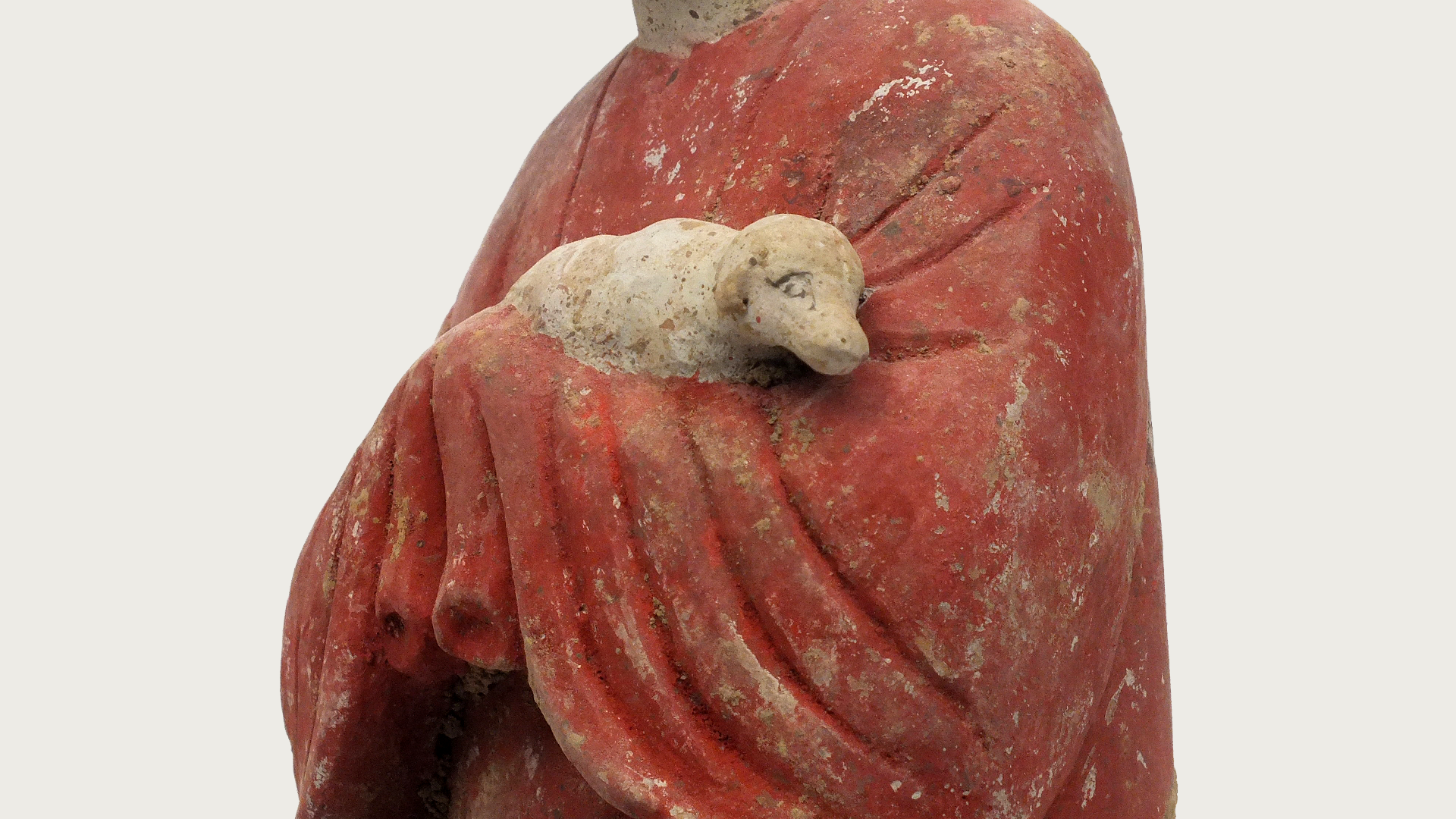
The sculpture’s most distinctive feature is the small dog resting comfortably in the lady’s folded arms.
Delicately modelled with an elongated muzzle, drooping ears and traces of painted detail, the animal introduces an unusually intimate and charming element into the composition.
Small companion dogs were appreciated among members of the Tang aristocracy, and their presence in courtly imagery reflects aspects of elite domestic life and personal refinement.
Although standing and seated female figures are familiar subjects in Tang Dynasty funerary sculpture, the representation of a seated court lady holding a small companion dog is comparatively unusual.
The combination of the seated posture, elaborate hairstyle, richly decorated robe and affectionate interaction with the animal gives this sculpture a distinctive character.
Tang Dynasty Court Culture and Funerary Sculpture
The Tang Dynasty (618–907 AD) is widely regarded as one of the great periods of Chinese artistic and cultural achievement.
During this era, China experienced remarkable prosperity, extensive international trade and the flourishing of a sophisticated aristocratic culture.
Painted pottery figures, commonly known as mingqi, were created for placement in tombs to accompany the deceased into the afterlife. These sculptures frequently represented officials, servants, musicians, horses, attendants and elegantly dressed court ladies.
The representation of generously proportioned women, elaborate hairstyles and richly flowing garments became particularly characteristic of Tang courtly aesthetics.
This pottery court lady offers an evocative glimpse into that world, combining the formal elegance of Tang funerary art with the unusual personal detail of a cherished companion animal.
Thermoluminescence Test – Laboratory Kotalla, Germany
The sculpture is accompanied by a thermoluminescence test report issued by Laboratory Kotalla, Germany, report number 02B180319.
The analysis records an estimated age of 1,150 years ±14%, a result consistent with the attribution of the pottery to the Tang Dynasty.
Thermoluminescence testing is an established scientific method for estimating the time elapsed since ceramic material was last fired.
The report provides important supporting evidence for the antiquity of the tested ceramic material, complementing the sculpture’s stylistic characteristics and documented provenance.
Provenance – Distinguished Amsterdam Private Collection
The figure comes from the private collection of Mr. J. P. S., a distinguished Amsterdam judge and art collector in the Netherlands.
The sculpture was acquired from his estate following his passing.
This private collection provenance provides an additional dimension to the object’s history, connecting a remarkable example of ancient Chinese pottery with an established Dutch collection.
A Remarkable Example of Tang Dynasty Sculpture
With its imposing height of 37 centimetres, richly coloured surviving decoration, refined facial modelling and unusual depiction of a lady holding a companion dog, this sculpture represents a particularly appealing example of Tang Dynasty painted pottery.
Its distinctive iconography, attractive state of preservation, private Amsterdam provenance and accompanying thermoluminescence report make it an important and highly individual work of Chinese funerary art.